




The Hidden Grid Bottleneck: Why Solar Farms Are Paying Utilities to Take Their Power
If you drove past a utility-scale solar farm in California, Texas, or South Australia on a clear Tuesday afternoon this spring, there’s a surprisingly good chance that half its inverters were deliberately throttled back—even with the sun blazing overhead in a cloudless sky. Even wilder: on the wholesale spot market, the operator of that solar farm might’ve been paying the grid $15 to $40 per megawatt-hour just for the privilege of dumping electricity onto the wires.
Wait—how on earth do we have an energy transition where everyone says we need more clean power, while simultaneously forcing solar plants to turn off at noon because electricity prices dropped below zero?
Welcome to the weird, high-stakes world of negative wholesale electricity prices solar curtailment. It’s no longer a rare statistical fluke that happens once a year on a mild Sunday in April. Across major renewable-heavy grids, negative daytime pricing has become a structural pattern that’s completely rewriting how power plants get financed, built, and operated.
Why wholesale electricity prices actually drop below zero
To understand why a power plant would ever pay someone to take its electricity, you have to remember one unforgiving law of electrical grids: supply and demand have to match every single second. Unlike corn, crude oil, or natural gas, you can’t just pile extra alternating-current electricity in a warehouse when nobody’s buying it—unless you’ve built dedicated storage.
Over the last five years, developers have gotten ridiculously fast at building utility-scale solar. Solar panels are modular, cheap, and have zero moving parts. What hasn’t gotten fast is building high-voltage transmission lines, or retrofitting older thermal power plants so they can ramp up and down like a sports car.
So here’s what happens at 1:00 PM on a sunny, breezy spring day when air conditioners aren’t running hard yet: tens of thousands of rooftop panels and desert solar arrays flood the regional grid at the exact same time. Meanwhile, large nuclear plants and certain combined-cycle gas or industrial cogeneration units can’t just flip a switch and shut off for four hours without incurring massive mechanical wear, restart fuel costs, or regulatory penalties. For those inflexible plants, it’s literally cheaper to bid “-$25/MWh” into the wholesale market for three hours than it is to shut down at noon and fire the boilers back up at 5:00 PM when the sun goes down.
Why your home electric bill doesn’t go negative when the spot market does
Whenever negative power prices make the news, people understandably ask: “If electricity is worth less than nothing at 2:00 PM, why am I still paying 28 cents a kilowatt-hour?” The short answer is that wholesale generation is only about a third to half of what shows up on a residential utility bill.
The rest of your bill pays for maintaining millions of miles of distribution poles, transformers, vegetation management, wildfire mitigation, and long-term fixed contracts that utilities locked in years ago. Unless you’re on a real-time dynamic retail tariff—which a few forward-thinking utilities now offer for EV owners and home battery users—those midday wholesale plunges get averaged out long before they reach your meter.
How transmission queues trap clean power in the wrong zip code
The second piece of the puzzle is geography. Often, the entire state isn’t swimming in excess power—just one specific substation pocket out in a rural valley where five solar developers all built 200-megawatt farms along the same aging 115kV transmission line.
According to data tracked by Lawrence Berkeley National Laboratory, more than 2,000 gigawatts of generation and storage capacity are currently sitting in US interconnection queues waiting for grid upgrades. When a local transmission line hits its thermal limit on a sunny afternoon, the grid operator has no choice: they send an automated dispatch signal telling the solar farm to curtail (throttle down) its inverters so the wires don’t sag and overheat.
For a solar developer who signed a modern Power Purchase Agreement (PPA), this is where the financial pain hits. Older contracts used to pay solar owners for every megawatt-hour they produced, regardless of what the spot market was doing. Today, corporate and utility buyers insert “negative price clauses”—meaning if the wholesale node price drops below $0/MWh, the buyer stops paying, or the solar farm has to eat the negative spread out of its own pocket.
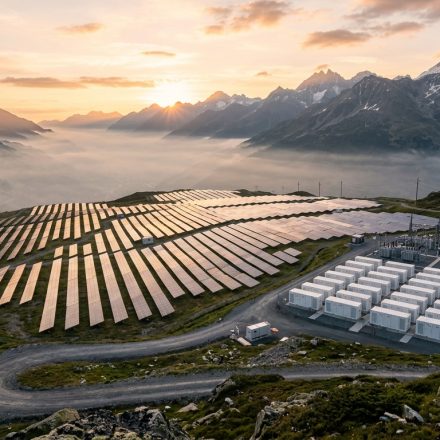
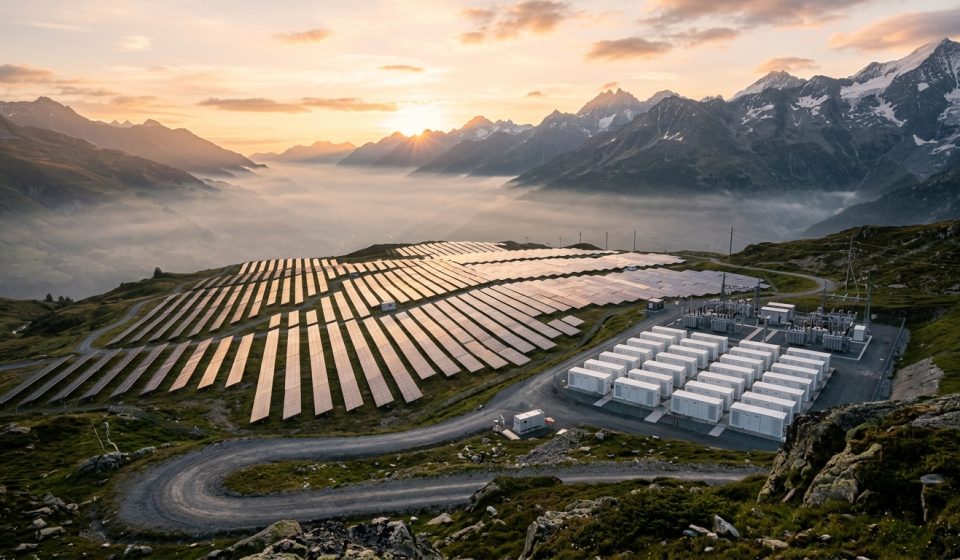
Why co-located batteries are turning curtailment from a headache into a business model
Now here’s where the story gets genuinely exciting. When midday power is dirt cheap—or literally free—and evening power between 6:00 PM and 9:00 PM spikes to $180/MWh as everyone comes home, cooks dinner, and plugs in their cars, that price spread is pure gold for anyone sitting on a big battery.
Five years ago, developers treated battery storage as an expensive compliance add-on. Today, almost nobody submits an interconnection application for a standalone solar project in a mature grid without pairing it with four-to-eight hours of storage. And as we explored in our deep dive on why grid-scale sodium-ion batteries are quietly winning utility contracts, falling cell prices and new non-lithium chemistries are making stationary storage dramatically cheaper per cycle.
DC-coupled vs. AC-coupled retrofits: how existing solar farms adapt
If you already own an operating solar farm that’s getting hammered by afternoon curtailment, you essentially have two ways to bolt batteries onto the site:
- DC-coupled storage: You wire the battery containers directly onto the DC side of the solar inverters before the power ever gets converted to grid AC. This is huge because solar panels usually only max out their inverter capacity for two or three peak hours around solar noon. Furthermore, DC-coupling often lets you add batteries without waiting three years for a brand-new grid interconnection study, because you aren’t increasing the maximum megawatts leaving the substation fence.
- AC-coupled storage: You install separate battery inverters alongside the solar inverters. It costs a bit more in balance-of-system hardware, but it gives you complete flexibility to charge the batteries straight from the grid overnight when wind power is cheap, not just from your own solar panels.
How AI-driven bidding engines manage the 5-minute dispatch game
Having a 100-megawatt battery sitting next to your solar panels is only half the battle. The real margin comes down to software that decides, every five minutes, whether to sell solar power now, stuff it into the batteries, hold capacity for grid frequency regulation, or dump everything during an evening price spike.
Modern energy trading desks run localized weather and load forecasting pipelines—often backed by high-efficiency compute clusters—that watch cloud cover satellite feeds, transmission line sensor temperatures, and competing generator bids in real time. If an unexpected cloud bank rolls over a neighboring county at 4:15 PM, nodal prices can jump tenfold in fifteen minutes. An automated dispatch controller that anticipates that ramp and holds 40% state-of-charge until 5:30 PM can boost a hybrid plant’s annual revenue by 25% to 40% compared to a dumb timer schedule.
What this means for the next five years of clean energy
Whenever critics point to solar curtailment or negative midday prices as proof that renewable energy has hit a wall, they’re misreading what markets actually do. Negative daytime prices are the loudest, clearest price signal capitalism has ever invented to say: “Stop building standalone noon-only solar here, and start building storage, flexible industrial loads, and transmission.”
We’re already seeing industrial buyers respond to that signal. Water desalination plants, green hydrogen electrolyzers, thermal ice-storage systems for commercial buildings, and batch compute workloads are starting to schedule their heaviest power draw between 10:00 AM and 3:00 PM specifically to soak up ultra-cheap solar bytes. Instead of forcing power plants to match rigid human habits, we’re finally starting to teach both batteries and heavy machinery to follow the sun.